Introduction
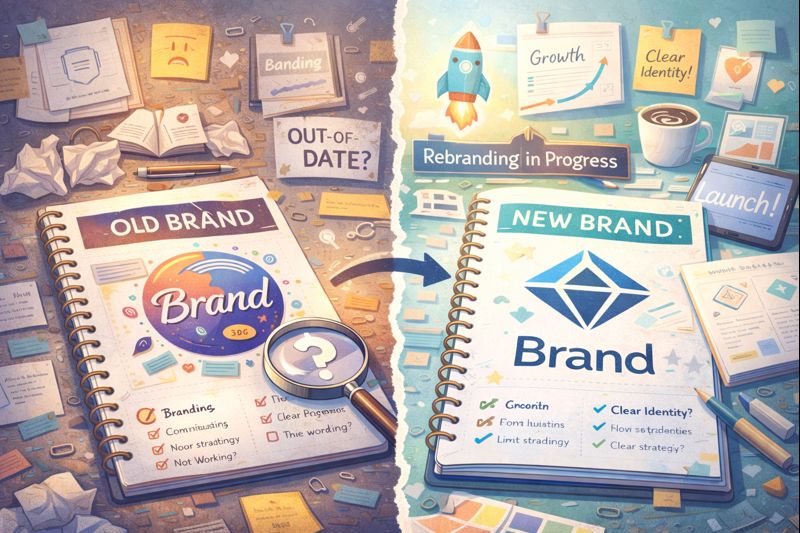
Rebranding is not about changing your logo because you’re bored with it.
It’s a strategic decision that reflects growth, evolution, or the need for alignment between who your brand is and how it’s perceived.
Many successful businesses rebrand at key moments — not because they failed, but because they outgrew their original identity. In this article, we’ll explore when and why you should rebrand your business, and how to do it intentionally.
What Is Rebranding (Really)?
Rebranding is the process of redefining how your brand looks, feels, and communicates.
It can include:
- Visual identity (logo, colors, typography)
- Brand positioning
- Messaging and tone of voice
- Digital presence
- Customer experience
Rebranding is not just visual — it’s strategic.
Signs It Might Be Time to Rebrand
1. Your Brand No Longer Reflects Your Business
If your services, audience, or values have evolved, but your brand hasn’t, misalignment occurs.
Common signs:
- Your brand feels outdated
- You attract the wrong type of clients
- Your visuals no longer feel “like you”
2. You’ve Outgrown Your Original Brand
Many businesses start small and grow fast.
If your brand was created quickly at the beginning, it may no longer support your current level of professionalism or ambition.
3. Your Brand Looks Inconsistent
Inconsistent branding across platforms weakens trust.
If your logo, website, social media, and messaging feel disconnected, a rebrand can help create clarity and cohesion.
4. Your Business Direction Has Changed
New markets, new services, or a new positioning often require a brand update to match the strategy.
5. You’re Blending in With Competitors
If your brand looks similar to others in your industry, it’s harder to stand out. Rebranding can help you differentiate clearly.
Rebrand vs. Brand Refresh: What’s the Difference?
- Brand refresh: Small updates (colors, typography, layout)
- Full rebrand: Strategic and visual transformation
Not every business needs a full rebrand — sometimes refinement is enough.
Common Rebranding Mistakes to Avoid
- Rebranding without a clear strategy
- Changing visuals but not messaging
- Ignoring your audience’s perception
- Following trends instead of purpose
- Rebranding too often
A successful rebrand is intentional, not impulsive.
How to Rebrand Strategically
A strong rebrand should follow this order:
- Brand strategy & positioning
- Brand personality & messaging
- Visual identity system
- Digital & physical application
- Consistent rollout
Skipping steps leads to confusion and wasted investment.
Final Thoughts
Rebranding is not about starting over — it’s about realignment.
When done right, a rebrand strengthens trust, clarifies positioning, and supports long-term growth. It allows your brand to evolve while staying true to its core.
At Dream Architects Studio, we guide brands through strategic rebranding processes — ensuring every decision has meaning, clarity, and purpose.
Not sure if it’s time to rebrand your business?
We help entrepreneurs evaluate, refine, and redesign their brand identity with strategy at the core.
👉 Explore our Brand Architecture services
👉 Contact us to start your rebranding journey